
What Is Structured Cabling and Why Does Your Business Need It?
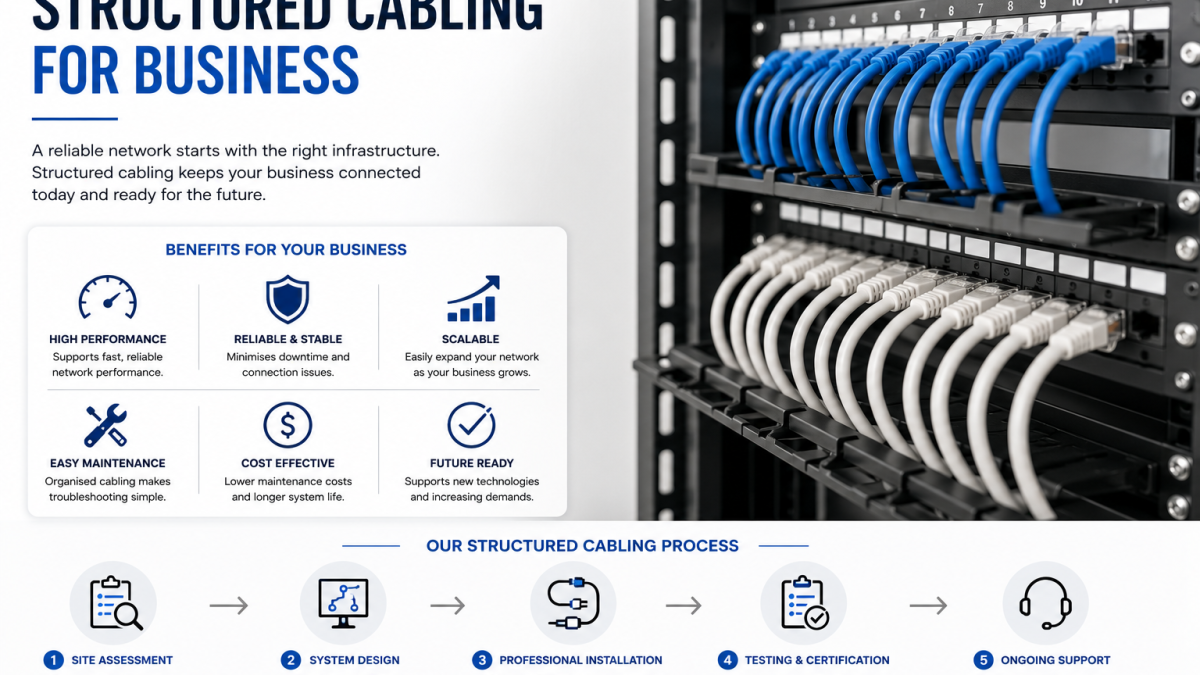
Structured Cabling for Business is the foundation of a reliable and high-performing communication network. Whether you’re setting up a new office, expanding your workplace, or upgrading outdated infrastructure, a professionally designed structured cabling system helps keep your business connected and ready for future growth.
Modern businesses depend on fast and stable connectivity for internet access, VoIP phone systems, cloud applications, security cameras, WiFi, access control, and countless other technologies. Without a well-planned cabling infrastructure, network performance can suffer, leading to downtime, slow data speeds, and costly maintenance.
In this guide, we’ll explain what structured cabling is, how it works, and why it’s an essential investment for businesses of all sizes.
What Is Structured Cabling?
Structured cabling is a standardised system of cables, connectors, patch panels, and networking hardware that supports the communication infrastructure of a building.
Unlike point-to-point cabling, where individual devices are connected with separate cables, structured cabling provides an organised network that allows multiple systems to operate efficiently through a central infrastructure.
A structured cabling system can support:
- Computer networks
- Business internet connections
- IP phone systems (VoIP)
- Wireless access points (WiFi)
- CCTV and security cameras
- Access control systems
- Audio-visual equipment
- Building management systems
Because everything is organised and labelled, businesses can expand or modify their network more easily without replacing the entire cabling system.
How Does a Structured Cabling System Work?
A structured cabling system connects every communication point within a building to a central location, often called the communications room or server room.
From this central hub, network services are distributed throughout the office using professionally installed data cabling.
The system typically includes:
- Backbone cabling
- Horizontal cabling
- Patch panels
- Network cabinets
- Data outlets
- Ethernet switches
- Fibre optic or copper cabling
This organised approach improves reliability and simplifies future maintenance or upgrades.
Key Components of Structured Cabling
Understanding the main parts of a structured cabling system helps explain why it is so reliable and scalable.
Entrance Facility
This is where external telecommunications services enter the building. It connects your business to internet providers and other communication services.
Equipment Room
The equipment room houses critical networking hardware such as servers, routers, switches, and other communication equipment. A well-designed equipment room ensures easy access for maintenance and future expansion.
Backbone Cabling
Backbone cabling connects different telecommunications rooms and equipment rooms within the building. For larger commercial properties, fibre optic backbone cabling is commonly used because it supports high-speed data transmission over long distances.
Horizontal Cabling
Horizontal cabling connects telecommunications rooms to individual workstations, meeting rooms, wireless access points, and other devices.
This is typically installed using high-quality Ethernet cabling such as Cat6 or Cat6A.
Telecommunications Rooms
These rooms contain patch panels, switches, and network equipment that distribute services to different parts of the building. Having dedicated telecommunications rooms helps maintain an organised and efficient network.
Work Area Components
These include the network outlets, patch leads, and cables used to connect computers, printers, IP phones, and other devices to the structured cabling system.
Benefits of Structured Cabling for Business
A professionally installed structured cabling system provides significant advantages for businesses.
Improved Network Performance
An organised cabling infrastructure reduces signal interference and improves the overall performance of your network. Employees experience faster file transfers, smoother video conferencing, and more reliable internet connectivity.
Easier Maintenance
Clearly labelled cables and patch panels make troubleshooting much faster. Instead of tracing individual cables throughout the office, technicians can quickly identify and resolve issues.
etter Scalability
As your business grows, adding new workstations, wireless access points, or network devices becomes much easier. Structured cabling is designed to accommodate future expansion without major disruption.
Reduced Downtime
Reliable cabling reduces network faults and helps minimise costly downtime that can affect productivity and customer service.
Cleaner Office Environment
Structured cabling keeps cables organised and hidden, creating a safer and more professional workplace.Cable management also improves airflow around networking equipment and reduces the risk of accidental damage.
Supports Multiple Technologies
One structured cabling system can support a wide range of business technologies, including:
- High-speed internet
- VoIP phone systems
- Enterprise WiFi
- CCTV surveillance
- Access control systems
- Audio-visual equipment
- Smart building technologies
This flexibility makes structured cabling a smart long-term investment.
Which Businesses Need Structured Cabling?
Almost every modern organisation can benefit from a professionally designed structured cabling system.
Industries that commonly require structured cabling include:
- Corporate offices
- Healthcare facilities
- Educational institutions
- Hotels
- Retail stores
- Warehouses
- Manufacturing facilities
- Government buildings
- Commercial property developments
Whether you’re operating a small office or a multi-storey commercial building, structured cabling provides the reliable foundation needed for today’s communication and networking technologies.
Common Structured Cabling Mistakes to Avoid
A structured cabling system is a long-term investment, but poor planning or installation can lead to network issues, expensive repairs, and limited scalability.
Here are some common mistakes businesses should avoid.
Choosing the Cheapest Cabling
Low-quality cables and components may reduce installation costs initially, but they often result in poor network performance and a shorter lifespan. Investing in high-quality cabling provides better reliability and supports future technologies.
Poor Cable Management
Messy or unlabelled cables make troubleshooting difficult and increase the risk of accidental disconnections. Proper cable management improves airflow, simplifies maintenance, and creates a safer communications room.
Ignoring Future Growth
Many businesses install only enough cabling for their current needs. As the business grows, additional workstations, WiFi access points, security cameras, or network devices may require costly upgrades. Planning for future expansion saves time and money.
Incorrect Cable Selection
Different applications require different cable types. Choosing the wrong category of cable or using unsuitable components can limit network speed and performance. A professional installer will recommend the most appropriate solution based on your business requirements.
The Structured Cabling Installation Process
Professional installation ensures your structured cabling system performs efficiently from day one.
1. Site Assessment
Every project starts with a detailed site assessment to understand your business requirements.
During this stage, technicians evaluate:
- Building layout
- Office size
- Network requirements
- Device locations
- Existing infrastructure
- Future expansion plans
2. System Design
Based on the assessment, a customised cabling design is created.
The design includes:
- Cable routes
- Telecommunications rooms
- Network cabinet locations
- Data outlet positions
- Backbone cabling
- Equipment requirements
A well-planned design helps maximise performance while keeping the installation organised.
3. Installation
Qualified technicians install the structured cabling system using industry best practices.
Installation may include:
- Cat6 or Cat6A data cabling
- Fibre optic cabling
- Patch panels
- Network cabinets
- Data outlets
- Cable management systems
- Labelling and documentation
All work is completed to meet Australian standards and minimise disruption to your business.
4. Testing and Certification
After installation, every cable is tested to verify performance and compliance.
Testing confirms:
- Cable continuity
- Signal quality
- Data transmission performance
- Correct termination
- Network reliability
Businesses receive confidence that their network infrastructure is ready for daily operations.
Why Choose Digital Sydney Communications?
Digital Sydney Communications provides professional structured cabling solutions for commercial properties across Sydney. Our experienced team delivers reliable network infrastructure for businesses of all sizes, supporting modern communication systems and future technology upgrades.
Our services include:
- Structured data cabling
- Fibre optic cabling
- Network cabinet installation
- Commercial WiFi solutions
- Telecommunications infrastructure
- In-Building Coverage (IBC)
- Distributed Antenna Systems (DAS)
- Mobile signal solutions
- Network testing and commissioning
Whether you’re fitting out a new office, upgrading an existing workplace, or developing a commercial property, we deliver tailored solutions designed for long-term performance.
Frequently Asked Questions
What is structured cabling used for?
Structured cabling provides the physical network infrastructure that supports internet connections, computer networks, VoIP phone systems, WiFi, CCTV, access control, and other communication technologies.
Is structured cabling suitable for small businesses?
Yes. Businesses of all sizes benefit from organised and scalable network infrastructure. A structured cabling system makes future upgrades and maintenance much easier.
Should I choose copper or fibre optic cabling?
The best option depends on your building size, bandwidth requirements, and future plans. Many commercial installations use a combination of fibre optic backbone cabling and Cat6 or Cat6A copper cabling for work areas.
How long does a structured cabling installation take?
Installation time depends on the size of the building and project complexity. Following a site assessment, you’ll receive a detailed installation schedule.
Why is professional installation important?
Professional installation ensures the system meets industry standards, performs reliably, and is properly tested before being placed into service.
Conclusion
A reliable network begins with the right infrastructure. Structured Cabling for Business provides the organised, scalable, and high-performance foundation required to support today’s communication systems and tomorrow’s technology.
From internet connectivity and VoIP phones to WiFi, CCTV, and smart building solutions, structured cabling helps businesses operate efficiently while reducing downtime and simplifying future upgrades.
Whether you’re planning a new office fit-out or modernising an existing workplace, investing in professionally installed structured cabling is a smart long-term decision. Digital Sydney Communications delivers customised structured cabling solutions across Sydney, helping businesses build dependable network infrastructure that supports growth, productivity, and reliable connectivity.