
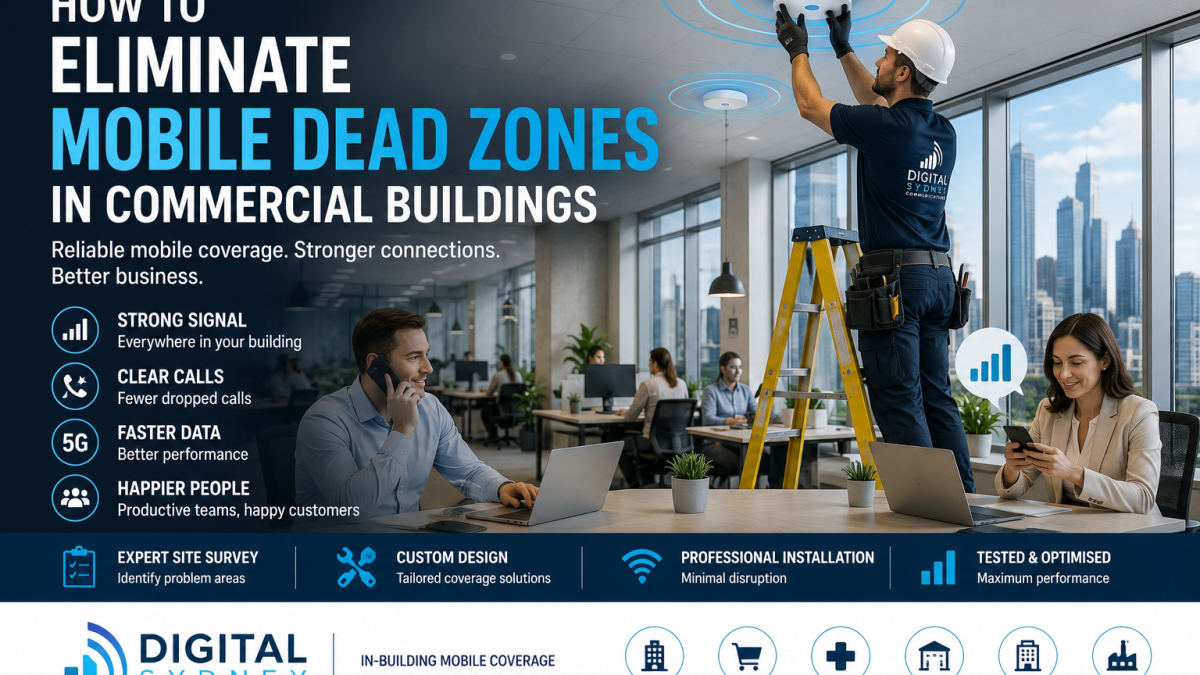
How to Eliminate Mobile Dead Zones in Commercial Buildings
Reliable mobile connectivity is no longer optional for modern businesses. Employees, customers, contractors, and visitors all expect strong mobile coverage throughout a commercial building. However, many offices, warehouses, shopping centres, hospitals, hotels, and industrial facilities still struggle with mobile dead zones that disrupt communication and reduce productivity.
If you’re looking to Eliminate Mobile Dead Zones in Commercial Buildings, the good news is that there are proven solutions available. Modern in-building coverage technologies can significantly improve indoor mobile reception, ensuring reliable voice calls, faster mobile data, and consistent connectivity across your property.
In this guide, we’ll explain what causes mobile dead zones, how they affect businesses, and the most effective ways to eliminate them.
What Are Mobile Dead Zones?
A mobile dead zone is an area inside a building where mobile phones receive little or no signal. In these locations, users may experience:
- Dropped phone calls
- Poor voice quality
- Slow mobile internet
- Failed text messages
- Difficulty accessing cloud applications
- Interrupted video meetings
Dead zones can affect a single meeting room or an entire floor, depending on the building’s design and surrounding environment.
Why Commercial Buildings Have Mobile Dead Zones
Many commercial buildings unintentionally block mobile signals because of the materials used during construction.
Reinforced Concrete
Concrete walls and floors absorb radio frequency signals, making it difficult for mobile coverage to reach interior spaces.
Steel Structures
Steel beams, columns, and roofing materials reflect and weaken mobile signals, particularly in large office buildings and warehouses.
Low-E Glass
Energy-efficient Low-E glass helps reduce heat transfer but also blocks a significant amount of mobile signal entering the building.
Basement Areas
Underground parking areas, storage rooms, and service corridors often have little or no direct connection to nearby mobile towers.
Large Building Layouts
The larger the building, the harder it becomes for outdoor mobile signals to penetrate every room and floor without assistance.
How Mobile Dead Zones Affect Businesses
Poor indoor mobile reception has a direct impact on daily business operations.
Lost Productivity
Employees waste time searching for areas with better signal instead of focusing on their work.
Poor Customer Communication
Dropped calls and unreliable mobile service can make it difficult to communicate with customers, suppliers, and business partners.
Reduced Employee Satisfaction
Consistent connectivity issues create frustration and affect workplace efficiency.
Lost Business Opportunities
Missed calls and delayed responses can result in lost sales and missed enquiries.
Safety Concerns
Reliable mobile communication is essential during emergencies, particularly in large commercial buildings where quick communication may be critical.
Signs Your Building Has Mobile Dead Zones
You may need a professional mobile coverage solution if you regularly notice:
- One or two bars of signal indoors
- Calls dropping unexpectedly
- Slow mobile data speeds
- Better reception outside than inside
- Dead zones in meeting rooms
- Weak signal near lifts
- No coverage in basement car parks
- Employees frequently complaining about poor reception
If several of these issues occur regularly, your building is likely experiencing indoor signal loss.
Best Solutions to Eliminate Mobile Dead Zones
The right solution depends on your building size, construction materials, number of users, and existing outdoor signal.
Distributed Antenna System (DAS)
A Distributed Antenna System (DAS) is one of the most effective solutions for large commercial buildings.
DAS distributes mobile signals through strategically placed indoor antennas, providing consistent coverage throughout:
- Office buildings
- Shopping centres
- Hospitals
- Universities
- Hotels
- Airports
- Multi-storey commercial properties
This solution is ideal for buildings with many users and large coverage requirements.
CEL-FI Smart Signal Solutions
CEL-FI systems intelligently amplify existing mobile signals and are well suited to:
- Small offices
- Medium-sized businesses
- Medical clinics
- Retail stores
- Professional suites
They provide stronger voice quality, faster mobile data, and improved indoor reception without requiring a full DAS installation.
Commercial Mobile Signal Boosters
Commercial-grade mobile signal boosters improve indoor coverage by capturing available outdoor signals and redistributing them inside the building.
These systems work well for:
- Small offices
- Cafés
- Retail shops
- Small warehouses
- Residential apartment buildings
Professional installation ensures maximum performance while complying with Australian telecommunications standards.
Why a Professional Site Survey Is Essential
Before installing any mobile coverage solution, a professional site survey should always be completed.
During the survey, technicians assess:
- Existing indoor and outdoor signal strength
- Building construction materials
- Floor plans and layouts
- Coverage objectives
- Number of mobile users
- Potential sources of signal interference
The survey helps determine whether a commercial signal booster, CEL-FI system, or Distributed Antenna System (DAS) is the most suitable option, ensuring reliable coverage without unnecessary equipment or costs.
Professional Installation Process
Eliminating mobile dead zones requires more than simply adding extra equipment. Every commercial building has unique construction materials, layouts, and signal conditions, so the solution must be designed specifically for the property.
At Digital Sydney Communications, we follow a proven installation process to deliver reliable in-building mobile coverage.
1. Site Survey
Every project begins with a comprehensive site survey. Our technicians assess the building to understand where signal loss occurs and what is causing it.
During the survey, we evaluate:
- Indoor and outdoor signal strength
- Building size and layout
- Construction materials
- Existing telecommunications infrastructure
- Areas with poor reception
- Number of users and devices
The information gathered allows us to recommend the most effective solution for your building.
2. System Design
Using the survey results, we create a customised mobile coverage design.
Depending on your building’s requirements, we may recommend:
- Distributed Antenna System (DAS)
- CEL-FI smart signal solution
- Commercial mobile signal booster
- External donor antennas
- Indoor antenna network
Each solution is designed to maximise coverage, improve call quality, and support current and future mobile network demands.
3. Professional Installation
Our experienced technicians install all equipment according to Australian telecommunications standards.
The installation may include:
- Roof-mounted donor antennas
- Indoor coverage antennas
- Signal amplification equipment
- Structured cabling
- System configuration
- Performance optimisation
We complete every project with minimal disruption to your daily business operations.
4. Testing and Optimisation
Once installation is complete, we thoroughly test the system to confirm consistent coverage throughout the building.
Testing includes:
- Signal strength measurements
- Voice call quality testing
- Mobile data performance
- Coverage validation
- System optimisation
Any adjustments required are made before the project is completed.
Benefits of Eliminating Mobile Dead Zones
Investing in a professional in-building coverage solution provides long-term benefits for businesses.
These include:
- Clearer voice calls
- Faster mobile data speeds
- Fewer dropped calls
- Better employee productivity
- Improved customer experience
- Reliable communication during emergencies
- Support for 4G and 5G connectivity
- Increased value of commercial properties
Reliable indoor mobile coverage helps businesses operate more efficiently while providing a better experience for employees, clients, and visitors.
Why Choose Digital Sydney Communications?
Digital Sydney Communications specialises in professional in-building mobile coverage solutions for commercial properties across Sydney.
Our services include:
- Distributed Antenna System (DAS) installation
- CEL-FI mobile signal solutions
- Commercial mobile signal boosters
- In-building mobile coverage systems
- Mobile signal site surveys
- Walk testing
- Sweep testing
- Passive Intermodulation (PIM) testing
- Commercial WiFi installation
Whether you manage an office building, warehouse, shopping centre, hotel, healthcare facility, or industrial site, our experienced team delivers tailored solutions that improve indoor mobile reception and long-term network performance.
Frequently Asked Questions
What causes mobile dead zones inside commercial buildings?
Mobile dead zones are usually caused by reinforced concrete, steel structures, Low-E glass, basement levels, and large building layouts that block or weaken mobile signals.
Can mobile dead zones be completely eliminated?
In most cases, yes. A professionally designed solution such as a DAS, CEL-FI system, or commercial mobile signal booster can provide reliable coverage throughout the building.
Which solution is best for large commercial buildings?
Large offices, hospitals, shopping centres, and multi-storey buildings typically benefit from a Distributed Antenna System (DAS), which delivers consistent coverage across large areas.
Is a site survey necessary?
Yes. A site survey identifies the source of poor reception and ensures the recommended solution is tailored to your building’s unique requirements.
How long does installation take?
Installation time depends on the building size and the complexity of the solution. After the site survey, you’ll receive a project schedule and estimated completion timeframe.
Internal Linking
Link to Related Blog Posts
- Why Your Commercial Building Needs a DAS
- DAS vs CEL-FI: Which Mobile Coverage Solution Do You Need?
- 5G In Building Coverage Sydney
Conclusion
Mobile dead zones can disrupt communication, reduce productivity, and create a poor experience for employees and visitors. Fortunately, businesses don’t have to accept unreliable indoor mobile coverage. By investing in the right technology, it’s possible to eliminate mobile dead zones in commercial buildings and create a more connected workplace.
Whether your property requires a commercial mobile signal booster, a CEL-FI solution, or a Distributed Antenna System (DAS), choosing a professionally designed and installed system will provide reliable voice calls, faster mobile data, and consistent coverage throughout your building.
Digital Sydney Communications helps businesses across Sydney overcome indoor mobile signal challenges with customised solutions backed by expert installation, testing, and ongoing support. If you’re ready to eliminate mobile dead zones and improve business connectivity, our team is ready to help.