
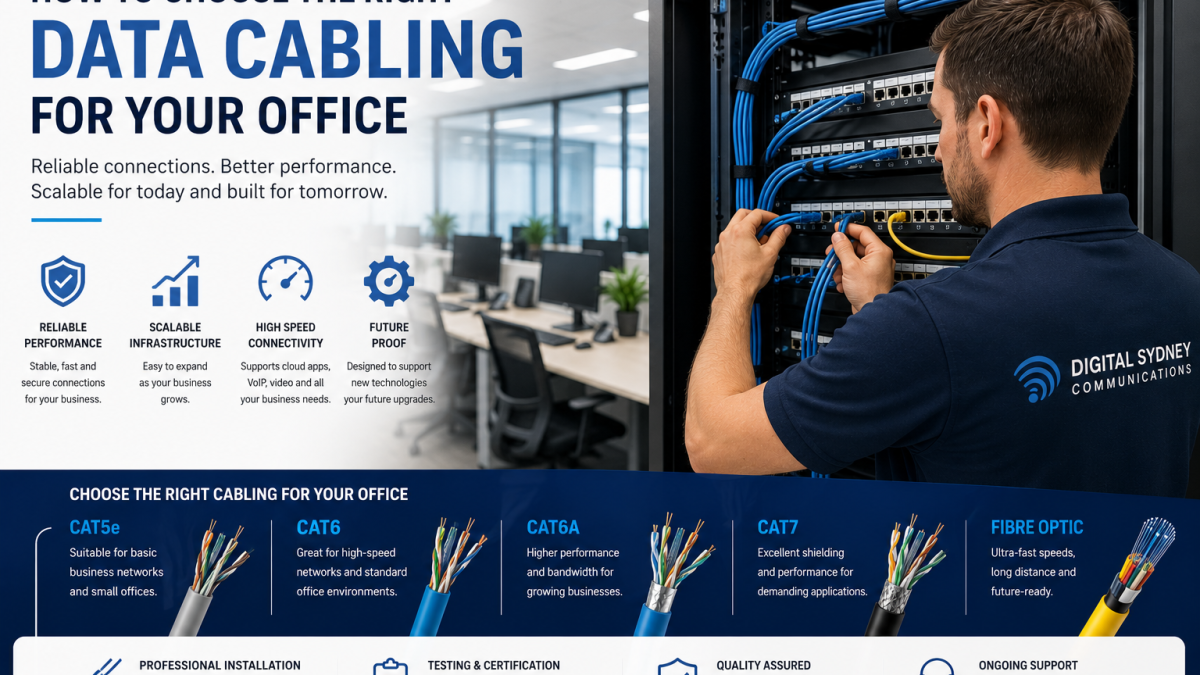
How to Choose the Right Data Cabling for Your Office
Data Cabling for Office is the foundation of every reliable business network. Whether you’re setting up a new workplace, relocating your business, or upgrading an existing office, choosing the right data cabling ensures fast internet speeds, stable connections, and long-term network performance.
Today’s businesses rely on cloud applications, video conferencing, VoIP phone systems, enterprise WiFi, and connected devices to operate efficiently. Without a properly designed cabling infrastructure, these technologies may experience slow performance, network outages, and costly downtime.
In this guide, we’ll explain the different types of office data cabling, the factors to consider before installation, and how professional cabling solutions can help future-proof your business.
What Is Data Cabling?
Data cabling is the physical network infrastructure that connects computers, servers, switches, wireless access points, printers, security systems, and other devices within an office.
A structured cabling system allows information to travel quickly and securely between devices while supporting internet access, internal communications, and business applications.
Professional office data cabling typically includes:
- Ethernet cables
- Patch panels
- Network switches
- Communication racks
- Wall outlets
- Cable management systems
- Fibre optic connections (where required)
Together, these components create a reliable and organised business network.
Why Data Cabling Matters for Modern Offices
Every business depends on a stable network to keep employees connected and operations running smoothly.
A professionally installed data cabling system provides:
- Faster network performance
- Reliable internet connectivity
- Better communication
- Support for cloud applications
- Stable VoIP phone systems
- Secure data transmission
- Easy network expansion
Poor-quality cabling or incorrect installation can lead to slow network speeds, dropped connections, and expensive troubleshooting.
Types of Data Cabling for Offices
Choosing the correct cabling depends on your business size, bandwidth requirements, and future growth plans.
Cat5e Cabling
Cat5e remains a suitable option for smaller offices with basic networking requirements.
Benefits include:
- Affordable installation
- Supports Gigabit Ethernet
- Suitable for everyday office use
- Reliable for small networks
However, many businesses now prefer newer cable categories that provide greater speed and future scalability.
Cat6 Cabling
Cat6 is one of the most popular choices for modern office environments.
Advantages include:
- Faster data transfer speeds
- Reduced interference
- Better overall performance
- Supports higher bandwidth applications
- Ideal for cloud-based business operations
Cat6 is well suited for businesses using video conferencing, large file transfers, and enterprise applications.
Cat6A Cabling
For organisations requiring higher performance, Cat6A offers significant advantages.
Benefits include:
- Higher bandwidth capacity
- Improved shielding against interference
- Longer transmission distances
- Excellent support for enterprise networks
- Better performance in high-density environments
Cat6A is commonly installed in larger commercial offices and business facilities.
Cat7 Cabling
Cat7 provides additional shielding and supports very high-speed data transmission.Although less common in standard office installations, it may be suitable for specialised environments requiring maximum network performance.
Fibre Optic Cabling
Many businesses are now integrating fibre optic cabling into their office infrastructure.
Fibre optic networks provide:
- Extremely fast data transmission
- Higher bandwidth
- Lower latency
- Greater reliability
- Long-distance connectivity
- Future-ready performance
Fibre is ideal for businesses with high data demands or multiple office locations.
Factors to Consider When Choosing Data Cabling
Every office has different networking requirements.
Before selecting a cabling solution, consider the following factors.
Business Size
A small office may only require a basic structured cabling system, while larger organisations often need scalable infrastructure capable of supporting hundreds of connected devices.
Future Growth
Installing cabling that supports future expansion can reduce upgrade costs later.
Consider whether your business plans to:
- Hire more employees
- Expand office space
- Increase internet bandwidth
- Add wireless access points
- Deploy smart office technology
Planning ahead helps avoid expensive re-cabling projects.
Network Performance Requirements
Businesses using cloud computing, video conferencing, large data transfers, or virtual servers should choose cabling capable of handling higher bandwidth.
Building Layout
The office layout affects cable routing, equipment placement, and wireless coverage. Professional planning ensures efficient cable management while maintaining compliance with industry standards.
Budget
Although higher-grade cabling may have a greater upfront cost, it often delivers better long-term value through improved performance, reliability, and reduced maintenance.
Common Office Data Cabling Mistakes
Many businesses experience network issues because of poor cabling decisions.
Some common mistakes include:
Choosing the Cheapest Cabling
Low-quality cabling may reduce installation costs initially but often results in lower performance and higher maintenance expenses.
Ignoring Future Expansion
Installing cabling that only meets today’s requirements can make future upgrades more expensive and disruptive.
Poor Cable Management
Untidy cable installations make troubleshooting difficult and increase the risk of accidental damage. Professional cable management keeps the network organised and easier to maintain.
Incorrect Cable Placement
Running data cables near electrical wiring can introduce interference and reduce network performance. Proper installation minimises these risks.
Skipping Professional Installation
Incorrect termination, poor testing, or non-compliant installation practices can lead to ongoing connectivity issues. Working with experienced professionals ensures reliable, standards-compliant results.
Benefits of Professional Data Cabling Installation
Professional installation provides far more than neatly organised cables.
Key benefits include:
- Reliable network performance
- Faster internet speeds
- Reduced downtime
- Easier maintenance
- Better cable organisation
- Compliance with Australian standards
- Scalability for future business growth
- Improved return on investment
A well-designed data cabling system forms the backbone of your office technology, ensuring every connected device performs efficiently.
Planning a Future-Proof Office Network
Technology continues to evolve, and businesses need network infrastructure that can support future growth. Choosing the right Data Cabling for Office today helps avoid expensive upgrades and disruptions later.
When planning your office network, consider:
- Expected business growth
- Number of employees
- Internet bandwidth requirements
- Cloud-based applications
- Enterprise WiFi coverage
- Security systems
- VoIP phone systems
- Smart office technology
- Future device expansion
Installing scalable infrastructure from the beginning allows your business to adapt quickly as technology changes.
The Importance of Structured Cabling
Structured cabling is a standardised approach to organising your office network. Instead of using separate cables for different systems, all network connections are integrated into a single, organised infrastructure.
A structured cabling system supports:
- Computers and workstations
- Enterprise WiFi access points
- VoIP telephone systems
- CCTV security cameras
- Access control systems
- Servers and network switches
- Cloud-based applications
- Building management systems
Benefits of structured cabling include:
- Easier maintenance
- Faster troubleshooting
- Improved network reliability
- Better cable management
- Greater flexibility for upgrades
- Reduced long-term costs
For growing businesses, structured cabling provides a reliable foundation that supports current operations while preparing for future expansion.
Why Network Testing and Certification Matter
Installing data cabling is only part of the process. Testing and certification ensure every cable performs as expected and meets industry standards.
Professional testing verifies:
- Cable continuity
- Signal quality
- Data transmission performance
- Network speed
- Compliance with Australian standards
- Correct cable termination
Certification provides confidence that your network is ready for business operations and helps identify issues before they affect users.
Signs It’s Time to Upgrade Your Office Data Cabling
Many businesses continue using outdated cabling long after it has become a performance bottleneck.
You should consider upgrading if you experience:
- Slow network speeds
- Frequent connection dropouts
- Difficulty supporting cloud applications
- Poor VoIP call quality
- Expanding office space
- Increasing numbers of connected devices
- Outdated Cat5 cabling
- Regular network troubleshooting
A modern cabling system improves reliability, productivity, and overall business performance.
Why Choose Digital Sydney Communications?
Digital Sydney Communications provides professional office data cabling solutions for businesses across Sydney. Our experienced team designs and installs reliable network infrastructure tailored to your current requirements and future growth.
Our services include:
- Office data cabling
- Structured cabling
- Fibre optic cabling
- Enterprise WiFi installation
- Network rack installation
- Network testing and certification
- Commercial telecommunications infrastructure
- Communications room fit-outs
- Ongoing maintenance and support
Whether you’re moving into a new office, upgrading an existing workplace, or planning a complete commercial fit-out, we deliver high-quality solutions that keep your business connected.
Frequently Asked Questions
What is the best data cabling for an office?
Cat6 and Cat6A are popular choices for most modern offices because they provide high-speed performance, excellent reliability, and support future business growth. Fibre optic cabling is ideal for organisations with higher bandwidth requirements.
How long does office data cabling last?
Professionally installed data cabling can last 15–20 years or more, depending on the cable type, usage, and future technology requirements.
Why is structured cabling important?
Structured cabling creates an organised and scalable network that improves performance, simplifies maintenance, and supports future upgrades.
Can office data cabling support WiFi?
Yes. Enterprise WiFi access points rely on structured data cabling to deliver reliable wireless coverage throughout an office.
Should businesses upgrade from Cat5e to Cat6?
If your business depends on cloud applications, video conferencing, or growing network demands, upgrading to Cat6 or Cat6A can improve speed, reliability, and future scalability.
Conclusion
Choosing the right Data Cabling for Office is one of the most important investments a business can make. A professionally designed cabling system provides the foundation for reliable internet connectivity, enterprise WiFi, cloud applications, security systems, and future technology upgrades.
Rather than focusing only on today’s requirements, businesses should invest in scalable infrastructure that supports long-term growth and changing workplace demands.
Digital Sydney Communications delivers expert data cabling, structured cabling, fibre optic installation, and enterprise networking solutions for businesses across Sydney. Whether you’re fitting out a new office or upgrading an existing network, our experienced team can design and install a reliable infrastructure that keeps your business connected today and into the future.